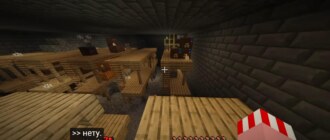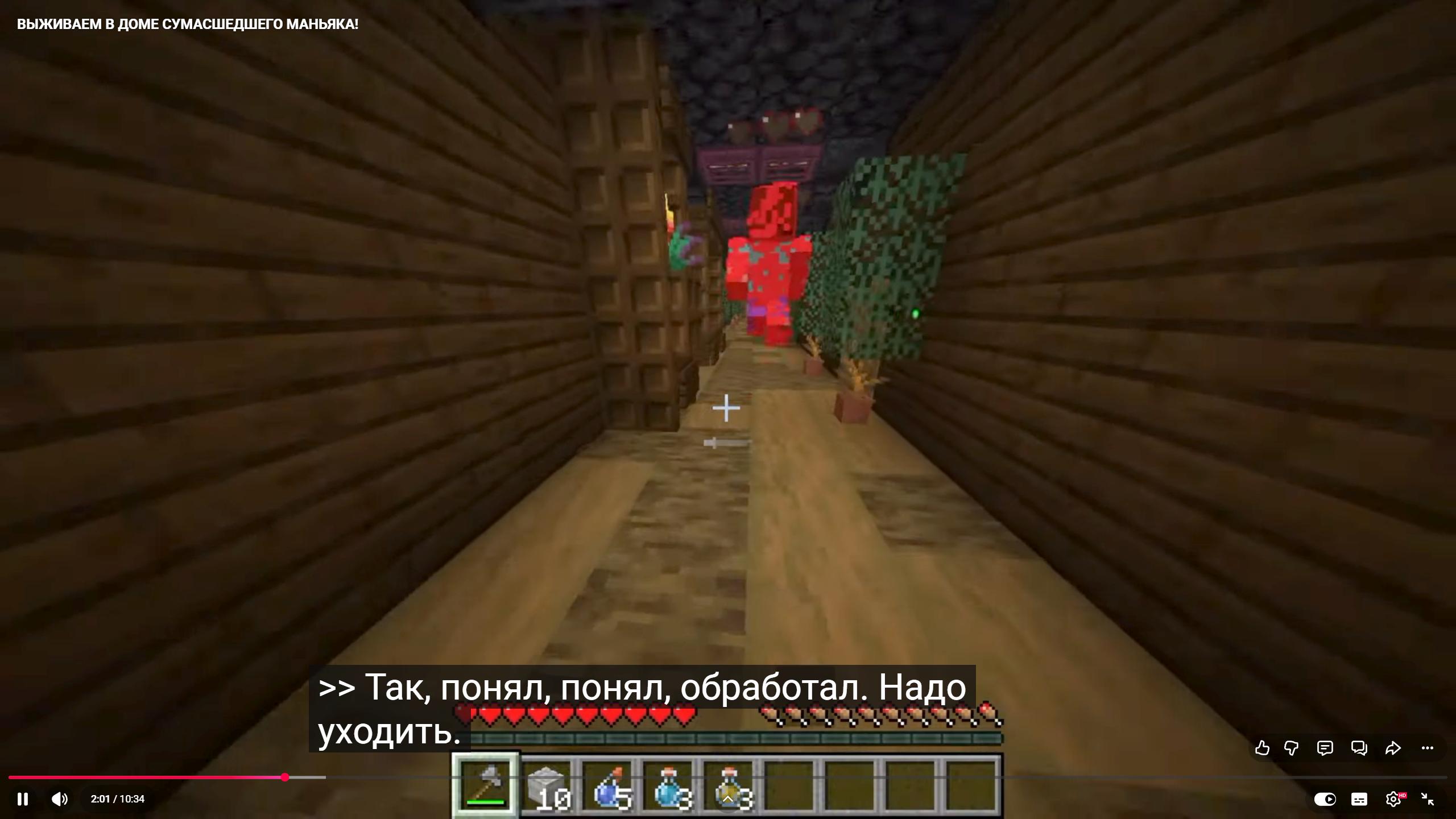
“Escape from the madman’s house” — a series on our channel about an asymmetric mode: one or two players run the maniac, the rest are kids who need to get out of a locked house. The format is often compared to traitor-hunting, but the logic here is different: the enemy isn’t hidden inside the team — he hunts openly. Below — the classes, the items and the rules our rounds run by.
The setup and the goal of a round
Everyone starts in a big house. Depending on the mode, one or two maniacs are chosen; the other participants are kids, and each must pick one of four classes. The kids’ goal is to escape: almost every door has a lock, so the round turns into a sequential key hunt. Rooms open in a chain: found a key — opened a new location — more keys lie there. The final point — the key to the main gates.
The maniac doesn’t need the goal in that form: his task is to not let anyone out. Hence the asymmetry: the kids have to hurry, the maniac has to stall.
Four classes: what each is good for
| Class | Health | Speed | Special feature | Our verdict |
|---|---|---|---|---|
| The Fat one | two bars | a bit slower than usual | takes more hits | in real rounds it’s the least useful: the maniac catches up faster than you can take two hits anyway |
| The Tough one | one and a half bars | normal | health regenerates over time | the most honest option for a beginner: a mistake doesn’t end the round |
| The Sneaky one | normal | normal | grants six extra items at the start of the round | the best class for item-based play: the key berries and stones stay in reserve |
| The Newborn | two points | twice as fast as normal | the model is smaller than the others, harder to hit | our favorite and at the same time the riskiest: speed saves, but two health forgive exactly one mistake |
Note: the fastest class is also the most fragile. That’s the key balance of the mode — and the source of all the funny moments on recording, because a newcomer picks “The Newborn”, takes the first random hit and finishes the round within a minute.
Items in the house
- Healing berries. Restore health — the only way not to wait for the class’s regeneration.
- Speed berries. Give a temporary dash; useful not for escaping in general but for a specific corridor where you’re already being seen.
- Stones. Disable the bear traps maniacs set on the passages. Without stones the room chain stalls: a trap on the only door means the round ends right there.
The maniacs use the same logic in reverse: they don’t need to chase everyone — it’s enough to set a trap on the route to a key and wait. That’s why our tensest rounds aren’t chases but the slow sweep of a room where someone has already been caught.
How it differs from the traitor-hunting series
There the source of fear is your own team: it’s unclear whom to trust, and the decision is made by vote. Here there’s no one to suspect: you know from the start who the maniac is, and the whole round is pure survival and search mechanics. The first is more fun through conversation, the second — through the moment. If your crew likes arguing and accusing, take Among Us; if running and yelling — this series.
Who’ll enjoy it and what to know before the first game
The format needs at least four or five people: with two, the round ends in twenty seconds. Second — the house must be rebuilt for the next round, otherwise you’ll open the same doors in the same chain and search for the same items: that’s exactly why we change the lock layout between episodes. And third: the trap rules must be agreed before the start — the argument “can you pull a friend out of a trap” breaks the round harder than the maniac himself.
How we film a round and what the viewer sees
The filming is built on a simple asymmetry: the maniacs call each other and agree on positions, while the kids sit in silence — in-game text at most. From this grow both the fear and the funny moments: the viewer knows in advance where they’ll be waiting for him, and the kids don’t. The second trick that makes the series watchable: we don’t reshoot the fails. If someone in a panic runs straight into the maniac, that moment stays in the episode — it explains the format better than any instruction.
How not to get bored on one map
We have one house, and if the conditions don’t change, the tenth round looks like the first. We use three levers: the number of maniacs, item availability and separate prohibitions. The simplest example — a mode with one stone for the whole house: one attempt to disarm a trap, and then the team decides who goes forward. The second — a round where the maniac’s single hit kills anyone, including the fastest: speed stops meaning anything, and you have to negotiate as a pair. The third — a ban on returning to already opened rooms: the key chain becomes linear, and the house has to be rebuilt from scratch.
Who’ll find it interesting to watch
The format’s audience is specific: people who like short episodes with a clear stake and react to the moment. People come here not to watch mastery of mechanics but to watch reactions — so the series lives as long as it involves people who care about who opens the next door.
Other series of the channel: Among Us in Minecraft — about roles and voting, “The Pizzeria Simulator” — about running the place and night shifts. The schedule, the team lineup and how we film — on our channel’s page.
The house needs commands and events, not manual door-opening: locks, a teleport to the opened location, item dispensing. All of that is done with a plugin on a plugin-capable core, not a client mod — otherwise you’ll have to re-agree versions with participants every round. Where to start choosing a core — in the breakdown of the difference between Paper, Spigot and Purpur.
Classes with different health and speed are either a client mod or a server-side implementation via custom items and effects. The second path takes longer to configure but works with a clean client on the players’ side: less desync and fewer rounds that had to be reshot. If you’re building such a series from scratch, start with two classes, not four: the balance across all four you’ll be patching as you go anyway.