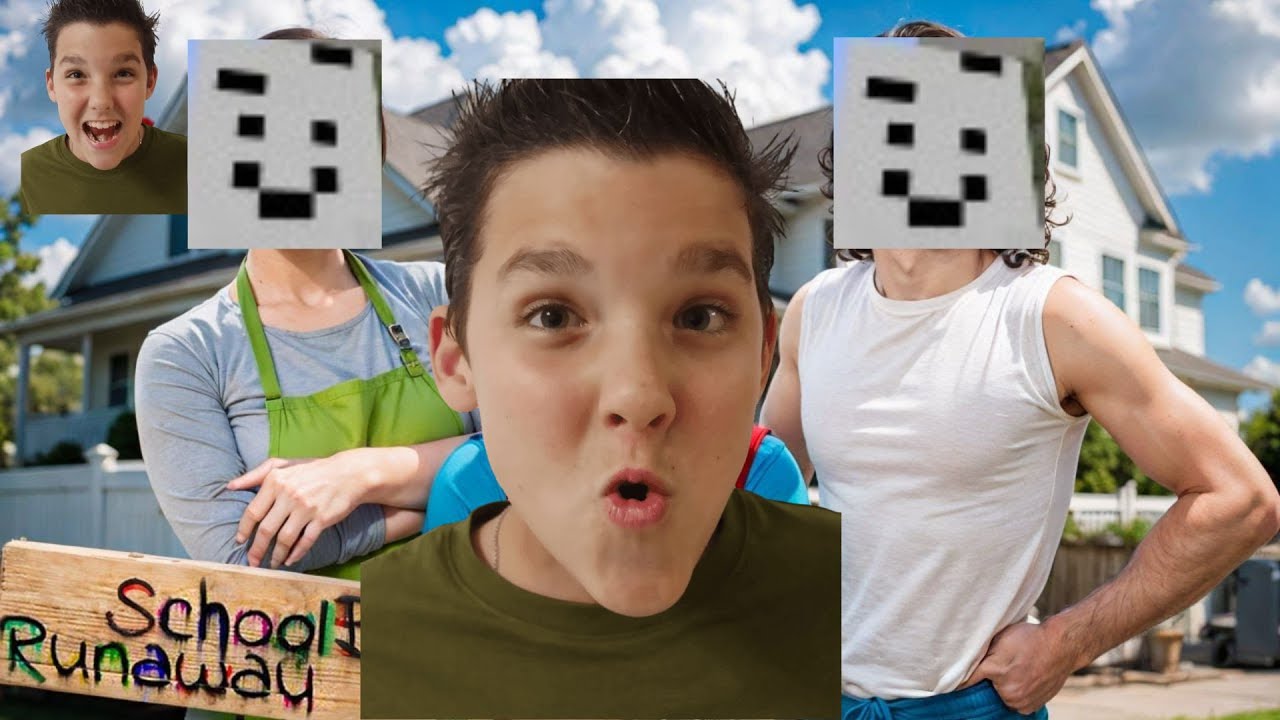
There’s a genre that doesn’t need dragons and zombies: just lock a schoolboy in a house and say “sit there until you finish your homework”. That’s how Schoolboy Runaway works — the biggest line on the Maxx Storm channel: 18 episodes in which the same house turns into a new puzzle every time. This guide collects the whole line: the first episode where it all began, the record-breaking routes — the ambulance, the balloons and the pool, the harshest episode with the house fire, the sequels with the police and the roof, and the hero’s universe with kids, an orphanage and the big reveal. Below is a calm breakdown of how exactly this escape works and why it turns out different every time.
The setup: a house you can’t leave until the homework is done
The rules are as simple as hide-and-seek in reverse. The hero stays home with strict adults — in different episodes it’s grandpa, mom, or both at once. Outside there’s a whole world; inside, there’s algebra. The adults keep checking: “studying?” — and any walk around the house has to end with an innocent activity in time: water the flowers, shuffle the crates, scrub the pool until it shines. The chores aren’t there for nothing: while the adult watches the chores, the schoolboy studies the house — where the key card lies, what the lock’s code is and why the storage room is such a convenient place to stand on a crafting table.
The first episode: where it all began
It all started with the classic setup: dad is on a business trip, mom is at work, and grandpa arrived instead with one rule — “sit and do your lessons”. Summer algebra was the last thing the hero needed, and while the adult made breakfast, the scouting began: shuffle the crates by the flowers, water the flowers, sweep the storage room — and along the way memorize where the key card lies and which code fits the door.
The first episode set the series’ formula right away: the code here was cracked on the second try, the card was found in the soap solution, and the main discovery — grandpa is a little hard of hearing, and that can be used. The finale came out movie-like: the hero switched off the breakers so grandpa would go fix the lights, put the crafting table in place as a support and dashed for the attic. “Last try”, the alarm blaring through the house and a sprint outside — this is the scene where the history of all the escapes began.
What an escape is made of
Every episode is a puzzle made of small finds that mean nothing on their own and stack into a route together. In the newest episode, the most popular one with viewers, the set looked like this:
- key cards hidden in the most unexpected places — under the soap solution, in a locker, behind the radiator;
- door codes: 233, 777, 877 — one after another, and each one opens a new floor of the escape;
- a pufferfish with sleeping pills — a treat for the adult, after which nobody comes to check the homework;
- the pool, the greenhouse and the attic as detour routes the parents don’t suspect;
- a little friend who distracts the adults with football talk while the main hero crawls where he isn’t asked to.
The finale is always the same — “last try”: a dash for freedom with the alarm raised, when the adults have already realized the kid hasn’t been seen at his textbooks for a while.
Record routes: the ambulance, the balloons, the pool
In the middle of the line, episodes appeared that viewers rewatch most often: in each of them the escape is only possible through an unexpected vehicle — an ambulance, a bunch of balloons or the hatch at the bottom of the pool.
The ambulance is the most theatrical of the three. Grandpa breaks his leg, and an “ambulance crew” arrives at the house: an examination, serious faces, a stretcher — under all this performance the hero calmly searches the house down to the last drawer. A separate laugh is the soap solution, because of which grandpa slips again and again and wastes time. And it all ends with a full-speed dash: the adult stays behind “for treatment”, the hero drives off and, as a parting gift, asks to say hi to grandpa.
The balloons are the route in reverse: the hero returns from the psych ward through the back door, but the adults are already on guard. Four key cards, half of them fake, music at full volume to smoke everyone out of the house, and the eternal “studying?” check. Code 555, which saved the day before, no longer works — the codes get changed after every escape. When doors and windows don’t help, the balloons go into action: the hero simply rises above the house and flies off into space.
The pool is the route for the patient: the hatch at the bottom leads into the sewers, but first you have to deal with the codes — 777 and 877 hide in the basement, exactly where the pufferfish with sleeping pills wants to go.
The greenhouse remains the most checked place in the house, grandpa is fixing the car and never lets the hero out of sight, so the escape stretches across the whole episode and ends only when the key cards, codes and distractions stack into one chain. We have a detailed breakdown of the three routes with all the codes and distractions, and the ranking of all routes collects the full order — from the stroller to prison.
The house fire: the harshest episode
The harshest episode of the series started with a clone: the hero was locked in, but a double was “doing homework” in his room while the real hero prepared the escape from outside. The partner pulled on a mask, rang the doorbell and introduced himself as the godfather — the adults let him in themselves. Then the classics: code 755 on the door, key card number 111, a restarted extractor fan that forces the adult to open a window.
The finale explains the episode’s reputation: a flint and steel comes into play, and the house catches fire for real. The hero and his partner run out through the flames while the adults stay behind to deal with the consequences — it all ends with plans for Disneyland, there’s nothing left to lose in this house. It was after the fire that the line stopped being just hide-and-seek from homework: the story got consequences that later episodes had to clean up. The runtime and all the codes are in the “episode breakdown“.
The police and the roof: sequel routes
After the fire the line continued with a police visit. The local officer inspects the house by the book: a search of the basement, the hatch, the crates and the car trunk. The nitpicking isn’t accidental: in the story, someone has already carried almost everything out of the house, including some fifteen kilograms of gold. The adults mumble “he went out for a walk”, the hero sits quieter than water, and instead of real pills they slip him a vitamin C tablet — the second time he doesn’t fall for it. The search ends with nothing: no banned items found, but it’s exactly this inspection that carries the episode.
The roof is the answer to the viewers’ question: in the comments under the previous video someone suggested escaping through the top. Grandpa nailed the gate shut just in case, but the boards on the window don’t stand a chance against a hammer. Eggs and soap solution distract the adult, and the hero calls his flight through the roof “aerobatics” himself.
Both episodes are sequels in the direct sense: they build on the events of earlier episodes and push the story forward, so watch them after the record routes. The detailed breakdown of both episodes is in the “police and roof” piece.
Why every episode is a new route
The secret of the series is that the house and the reason for the escape repeat, but the road out — never. In one episode the hero leaves on a stroller, in another he rises on balloons, in the third he dives through the pool, in the fourth he leaves in an ambulance, in the fifth he escapes the prison he built himself by setting the house on fire. It’s interesting to watch exactly like that: you know the rules, but you don’t know the map. It’s the same principle viewers love in our “Escape from the Madman’s House” — only there you hide from a maniac, and here you run from homework.
Roles: who plays whom
The series is a team effort. The adults are voiced by actors from the crew, and it’s important not to interrupt them: grandpa is almost deaf, mom fixes the car and still hears everything, and little Kumys is the hero’s friend who either helps him hide or almost gives away the hideout himself. Because of this living interaction, lines like “I’m a fish, I’m a fish, swimming past” sound more convincing than any scripted dialogue.
The universe and special episodes: kids, orphanage, the reveal
By the middle of the line the series had outgrown the “one house — one escape” format. First the hero gets kids: a separate episode explains where they came from and how they change the rules. Then a little brother shows up in the story, and the story moves to an orphanage and a new family — the house changes, the adults change, but the “homework first” rule stays the same. These episodes are what turn a set of escapes into a universe with its own timeline.
Special episodes close the line. In the reveal, the team shows how the escapes actually work: who voices the adults, where the camera operators stand and why not a single episode is shot in one take. Then — reconciliation: the hero asks his parents for forgiveness, and those minutes sound unexpectedly serious. The punishment and the final prison episode close the story: the route from the stroller to prison is complete. The arc is covered separately: kids, brother and orphanage — in the “Schoolboy universe” piece, special episodes — in “the reveal and reconciliation“.
How it differs from the original game
Schoolboy Runaway is a mobile game about escaping your parents over bad grades. Our series carries its spirit into Minecraft: the cubic house is built anew for every episode, the chores and routes are invented for that house, and the story with the parents is played by real people. That’s why in one episode “sleeping pills in the fish” works, and in another — breakers you have to switch off to send the adults into the dark. The original gives the setup, Minecraft gives the freedom of the map.
Where to start watching
The biggest episode — “Escaping the new house” — is embedded right at the start of the article: all the mechanics are visible in it at once, from key cards to the final dash. Then it’s easier to go in order: the first episode with grandpa to understand the formula — then that very “new house”, the record routes (ambulance, balloons, pool), the harshest episode with the fire — and after it the universe with the special episodes. The full episode list lives in our channel section — new series appear there too.
The bottom line: Schoolboy Runaway in Minecraft is a comedy of escapes where the main enemy isn’t a monster but the homework schedule. It’s the only channel line we’ve described in full: 18 episodes, three record routes, a fire with consequences and special episodes that tied the universe together. The rules are fair, the map is new every time, and you can only win with attention: spot the key where the adult sees only a mess.
Building a similar house isn’t hard: pick two or three “adults” and one runner, build a house with two floors and a back door, scatter three or four clue items (a key, a note with a code, “sleeping pills”) and agree on the rules: the adult checks the hero every two minutes, and the escape is allowed only after all the chores. The game starts not with building but with handing out roles — without them it’s just a house.