Mob hide-and-seek is one of those rubrics on the Maxx Storm channel that grew out of one simple idea: turn into a Minecraft mob, freeze among real pigs and cows and try not to get caught by the hunter. In this retrospective we return to spring 2024 and break down the very first episode of the rubric: how the rules were spelled out right on the move, why the “tick technique” became a local legend and what the rubric grew into later. We lay out the rules, round mechanics and differences from later “chameleons” by composition.
The game’s point: become a mob and don’t you dare move
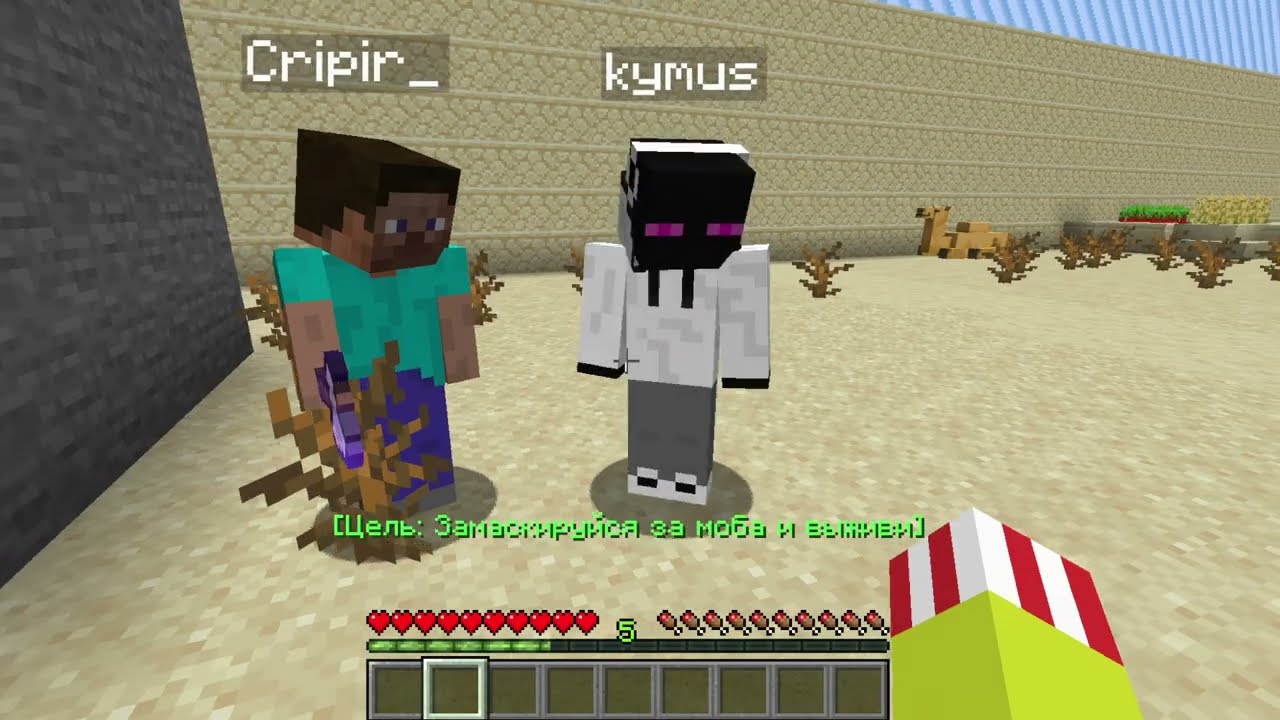
Max explains the rules of the first episode on camera, in the course of the action. The hunter’s task is to find and kill all the disguised mobs. The task of the rest is to take a tag, turn into any mob and get into the role: “the main thing is to behave normally, don’t give yourself away”. The round is limited by a timer: at first the hunter was given four minutes to search, later the limit was cut to two, so runs don’t drag on.
Already in the pilot you can see the rubric’s taste: disguise is not only appearance but also behavior. “I was looking at you like a cow. You did it too smoothly”, the hunter’s complaint sounds like feedback from a strict choreographer.
The first round’s mechanics: what it all came together from
The first episode of the rubric is simultaneously rules and a tutorial round. What it consisted of:
- Transformation. Each participant takes a tag and becomes any mob — from a pig to a cat, and real animals on the map work as cover.
- Timer. Four minutes for the first search, then two — and further throughout the series.
- Movement. Max boasted of the learned “tick technique”: freeze and move like a mob, without human smoothness. Cows, though, after that episode were “out” — their gait gives them away instantly.
- Bait. A fake chicken that has no business being on the map: Max admitted he placed it “just for fun” and dragged out the time a little.
- Rotation. The hunter changes after every round, so everyone gets to be both in disguise and in search.
A funny detail of the pilot: the word “Victory” sometimes lit up by itself — the timer ran out, and the hunter hadn’t touched anyone. From that grew the unwritten rule of all future seasons: disguise counts as fair only if you can both freeze and move like a mob.
How the pilot differs from the “chameleons”
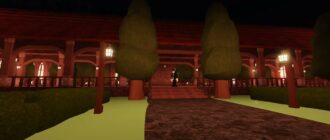
Years later the rubric got a separate branch — “chameleon hide-and-seek”. An important caveat: this is already not Minecraft but a Roblox game, where disguise is arranged differently. The player doesn’t turn into a mob but paints himself to match the background: picks a color, takes a sprayer, freezes and literally dissolves into a library wall or a fence.
The maps are different too — a mansion, a kitchen, a stadium instead of a pen with mobs. But the spirit is the same: in the episodes “Everything Will Be Fine” and “I Hide Only Above the Door” friends again argue about who gives themselves away, who hid “imba” and who among them is actually Grepa. The rules of classic mob hide-and-seek, born in the pilot, we described in detail in the guide to the rubric’s rules, and the second map of that era — the space base — earned a separate breakdown.
Where to start watching
The entry point is obvious — that very first episode of March 2024: in it the rubric is seen in its zero cycle, when the rules are still spoken aloud and the participants learn from their mistakes live. After that it’s logical to read the guide to mob hide-and-seek rules, move on to the space base, and save the “chameleons” for dessert — it’s a different game, but with the same philosophy of freezing.
The full list of the team’s series and directions is in the material about the Maxx Storm channel.
The scheme repeats on any server. Install a plugin or datapack for turning players into mobs, prepare a field where real pigs and cows sit next to cover, and give the hunter a timer — four minutes is enough for newcomers, cut veterans down to two. Key fairness settings: no jumping in place, a penalty for moving too smoothly and a rule that the hunter doesn’t break blocks. And don’t forget rotation — everyone must be the hunter, otherwise arguments are inevitable.