The challenge series on the Maxx Storm channel knows how to pressure with the environment no worse than hunters: in the volcano episodes the team survives inside the crater with a limited number of respawns, and a separate challenge about lava infection tests how long a base eaten away by lava from all sides will hold. We’ll break down by parts: day one, the eleventh day with three volcanoes and the infection rules.
The challenge’s point: get out before it erupts
The first episode sets the frame. Max and Varya wake up inside a volcano, and the condition is harsh: you can respawn only nine times — there won’t be a tenth. Time presses from above: the volcano starts erupting, and you can’t dawdle. Hence the format’s main focus — the balance between mining resources and fleeing: looting chests is nice, but every extra minute in the crater costs lives. At the end of day one the team gets outside — and moves to the second volcano, and the episode with three volcanoes takes the idea to the limit: by the eleventh day survival turns into a full raid through three fire arenas.
The mechanics: what a volcano is made of
- Lives as currency. Nine respawns for the whole team, and by the eleventh day some participants have only a few “pine cones” left — that’s what the episodes call lives.
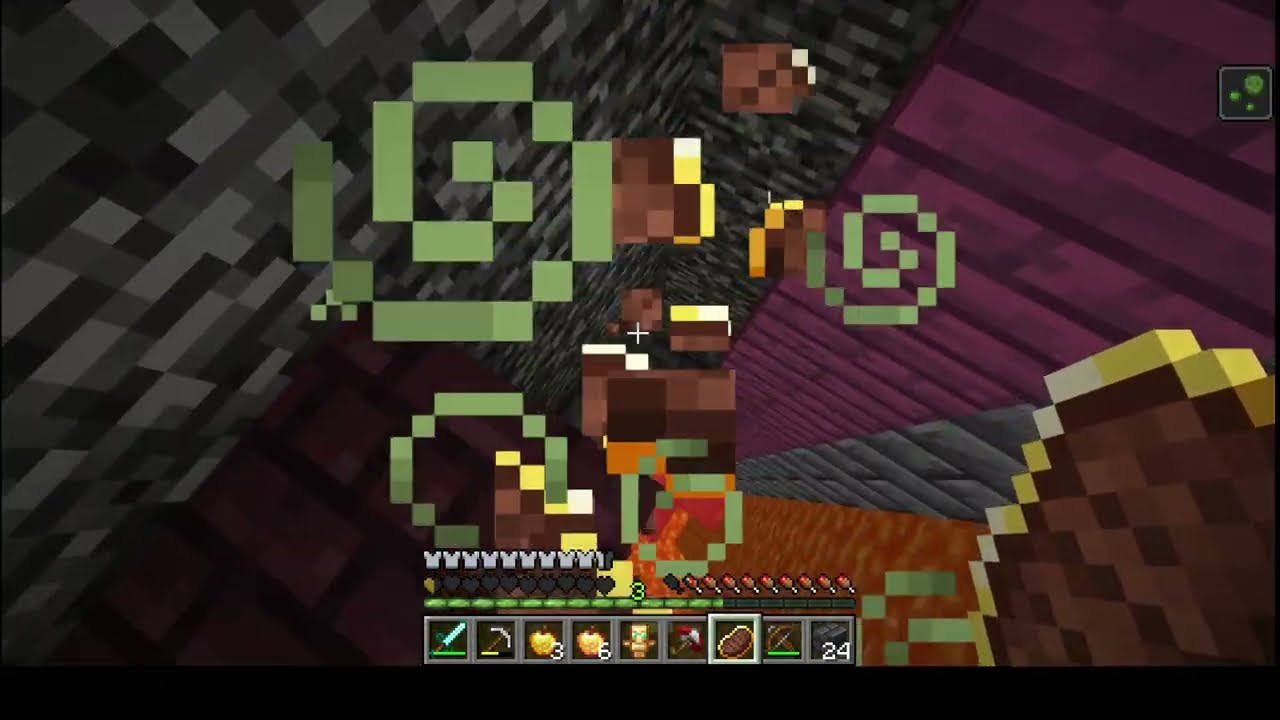
- A living arena. Magma in the volcano turns into crystals that splash lava; snakes and worms jump out of the crevices, and anacondas squeeze a ring around the player.
- Escape tools. Crossbows against the creatures, umbrellas that you don’t wear but hold in your hands, and the classic “dig upward while holding shift” tactic.
- The loot system. From the chests drop sneakers that speed up running, a glove of power, necklaces, a shock pendant, a breathing tube, a plastic helmet, a “cloud in a bottle”, a certificate and a gel flamingo you can fly away on.
The key moment of the eleventh day is loot distribution. The team holds a full set assembly: totems occupy hands in advance, because “it’ll be like some kind of I”, and the flamingo is saved for evacuation. It was exactly the right items, not luck, that pulled everyone out of the third volcano.
Lava infection: a separate test of the base
Quite a different challenge — a short episode about lava infection. The format of the challenges rubric here is this: each picks a bed, gets their blocks and builds a base that the infection will eat away from all sides. The main gimmick the participants discovered is that the infection can be “settled inside”: if you set up right in its body, it stops growing. What comes out is a hybrid of survival and city-building: some build a little house far away, others register inside the lava and save territory.
Survival tactics in the fire
Four rules come out of the episodes. First — don’t be greedy: a pocket piston and a pile of chests get looted faster if you share rather than drag everything alone. Second — totems in hands before entering a danger zone, not after the first death. Third — movement items matter more than armor: sneakers and the flamingo decide more than an extra layer of iron. Fourth — read the map: checkpoints and buttons can be traps, about which the first episode warns literally with a scream. A similar philosophy — saving resources against environmental pressure — exists in the survival in overgrown caves and in the hardcore seasons, where mistakes cost the most.
Where to start watching
Go by chronology: first day one in the volcano — there the rules and the excitement of the first minutes are clear, then the episode with three volcanoes — the culmination with the best loot and the final set assembly, and for dessert the short lava infection, if you want a calm city-building challenge. About the whole team and other channel challenges we tell in the channel profile.
Take a volcano map or build the arena yourself, write down the respawn limit for the team and the eruption timer. Scatter chests with themed loot across the crater: movement items, elixirs and the “flamingo” for evacuation. For the infection mode a zone that gradually expands is enough — and the rule about “settling inside”: a base inside the infection doesn’t grow, but living there is awkward too. Test the timers in advance so the final evacuation is tense but passable.