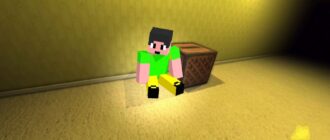
Sometimes a rubric episode shows that the game stopped being just a game long ago. The thirty-seventh part of the Maxx Storm channel’s among rounds is called exactly that: “I became lime in real life” — the hero settled so deeply into his image that he took it beyond the screen. Inside is the classic Among Us mode with tasks and votes, the newcomer Natakha, the trusty dumpling skin and one mysterious bug whose solution the author asks thirty likes for. We’ll break down by parts what happens in this round, why it hooks and how the classic differs from hide-and-seek.
The situation: the newcomer, the dumpling and two traitors
The action unfolds in Among Us’s classic mode: tasks, reports, votes — no hide-and-seek running around. Max joins in his signature dumpling role and admits that he always plays exactly in this role. Natakha joins the company — she’s introduced to the subscribers, and along the way everybody checks the turtle, her pet. Varya connects to the investigation’s logic: if it’s not the two of us, then the traitor is to be looked for among the rest. When enough players gather in the lobby, two traitors are set at once — and from that moment every report turns into a small court with a vote.
The moment where the game goes beyond the screen
The juiciest thing in the episode is the places where reality and the game bleed into each other. First Max hears real life outside his window: you can hear everything, how the cars pull up — and he apologizes to the team for the outside noise. Then a bug appears: Natakha suddenly floats in the air, and the players seriously work out what it is (“I see you’re floating in the air”, “did you learn to fly?”). The author promises to tell the puzzle’s solution if the video under it gets thirty likes — and the viewer turns into a participant of the investigation. Add the disconnected call, the light turned back on and a hatch that gets fixed right under the possible traitor’s nose — and you get the picture for which the rubric is watched: the game lives by its own rules, the people behind the screens live their own lives, and both lines intertwine in the round.
Why it hooks
Such episodes watch easily for three reasons. First, living people: Natakha apologizes for every move, Max jokes and tries a piercing on the skin, Varya methodically collects evidence — it’s not a pro tournament but a warm company you want to return to. Second, the bug becomes a plot: the floating Natakha is discussed with versions and checks, and thirty likes for the solution turn the comments into a detective story. Third, the roles here are personas, not functions: the dumpling in the signature skin, the long task with sorting pebbles, a cool pet on the team and a gas mask spotted somewhere beyond the river — all of this holds the rubric’s recognizability. That’s why “lime in real life” reads naturally: the hero just continued his color beyond the round.
How the classic mode differs from hide-and-seek
If you know the rubric mostly by hide-and-seek, here’s how the classic differs:
- Tasks instead of escape: the team walks the map and closes tasks — like sorting the pebbles, long and painstaking.
- Reports and votes: the found body is discussed by everybody together, and the vote decides whom to throw out — in the episode they chose between the maroon and the light green one.
- The engineer and hatches: a player with this role proves it to the team and can jump into a hatch — the role gives its own moves.
- Sabotage: the lights get cut, the call gets disconnected — the panic in the classic is quiet but palpable.
- Distance: “keep your distance” is a rule that works in both the classic and hide-and-seek.
Conclusion: where to start watching
The episode came out in 2023, runs about sixteen minutes and today watches like a retrospective of the rubric: lively, funny and understandable even for a beginner. Turn it on as a sample of the classic mode, and then pick a direction: the Among Us rubric in Minecraft is collected into a separate guide, the catalog of our Among Us roles explains who the engineer is and how to eat it, and the page of the Maxx Storm channel will suggest what’s on air right now. The conclusion from this story is simple: a rubric is alive while people live in it — with their skins, bugs and the voice outside the window.
The instruction from the episode description looks like this. First the versions: to enter the channel’s projects you need an updated Minecraft of the latest official version, and for the game itself — a fresh version of Among Us, otherwise the lobby won’t assemble. Then a seat at the table: the channel has a personal server, and getting into a round is simple — go to the Telegram channel and write a comment under the post with the game time, and from you by tradition — a comment, a like on the video and a subscription. The last step is the mode setup: for a first acquaintance take the classic, like in this episode: it introduces the roles and tasks more gently than hide-and-seek, and teaches you to keep your distance. Skins, pets like the turtle and little things like the piercing — that’s already a personal assembly of the image: without it a round still assembles, but noticeably more boringly.