On the Maxx Storm channel big rubrics live in seasons, while small ones appear as experiments: the channel tries a format with one or two episodes and watches the reaction. In this collection there are five such trials: squid game, the deadly run, spin the bottle with Karas and Kumys, capture the flag on the sniper server and the conversational “been there — never”. We’ll break each down by parts: what the rules are, what the mechanics are made of and what exactly is addictive in these formats.
The experimental lane: five formats on trial
An honest frame right away: these are experimental formats, and not all of them grew into full rubrics. Some stayed a single episode, some stretched to a couple of series — and that’s exactly why the collection is useful: you can see how the Maxx Storm channel’s team looks for mechanics that later move into big seasons. We told more about the channel and the team in a separate piece, and here it’s only about the formats.
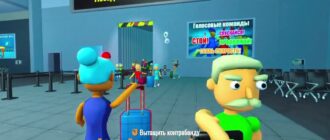
“Squid game” is declared as a game “not for life but to the death”: participants sign up with the overseer — literally “you sign up, which means you agreed to a fun game” — pick a helper item like a fishing rod or an umbrella and go through a chain of numbered trials. “The deadly run” is a team format: under the pretext of a secret rubric six acquaintances gather on the server, each gets a couple of lives and about seven-eight minutes for a track of traps. “Spin the bottle” with Karas and Kumys looks like hide-and-seek with shooting: one hides, the rest parachute in, and roles and punishments are drawn in a circle.
The mechanics: what the episodes are made of
- Squid. The trials go by numbers: “red light — green light”, where everything is allowed beyond the line; tug of war with fishing rods; a gloomy black tunnel; the final musical chairs, where the chairs are removed, you can only run along the edge and can’t sit in the center — there’s a “book” standing there.
- The deadly run. A minefield, rockets, firecrackers and cannons, bonus stars, forks of “left or right”, hunters against runners and checkpoints without which death throws you far back.
- Spin the bottle. Parachute jumps under a blindness effect, the hunter has limited ammo — in one round twelve rounds are given instead of the usual thirty, and hints are obtained by cunning: for example, by calling the elevator right to your cover.
Capture the flag and “been there — never”: the two poles of the collection
“Capture the flag” is the most familiar mechanic of the five, the episode was shot on the sniper server in season two. Reds against blues, you need to hold the point and farm points, the round time is limited. The episode’s gimmick is deliberately unequal guns: one team has a rifle, the other weak snipers, and this is honestly spelled out before the start. Rounds are livened up by the joke alarm “grandpa escaped”, and the finale is decided in the last seconds — the team with the snipers scratches out the win thanks to discipline.
“Been there — never” is the opposite pole: without any shooting at all. Five people stand on platforms, the host reads out awkward questions — from cat food to forgotten gifts — and if you answer “been there”, you jump to a cell up, if “never” — you stay in place. The goal is to reach the very top, and for those who tried to cut the path directly, the map quickly reminded them it won’t work. The episode’s outcome: Grepa won, Max stayed third.
Tactics: what the episodes themselves advise
A few simple rules come out of the small rubrics. In the run save your lives and don’t walk past the stars: they save exactly on trap combinations. In the bottle change position after every round — those who got remembered get their old cover checked first. The same principle works in hide-and-seek in general: we broke down which maps suit changing covers. In capture the flag what matters is not the weapon but farming points as a team that doesn’t scatter. And in “been there — never” the main thing is to agree in advance that an honest answer is worth more than a victory.
Where to start watching
If you want shooting and excitement — take capture the flag: it’s closest to the classic mini-games, of which we have a separate collection of official Minecraft mini-games. If you want chaos and laughter — squid with the musical chairs and the bottle with parachutes. For a calm evening “been there — never” will do: there’s almost no mechanics there, but the whole episode rests on honest answers and the team’s teasing. Small rubrics are good exactly because the rules in them are born on the go — and sometimes one lucky idea from a trial episode then works for a whole season.
All five formats are repeatable on a private server. For squid and the run an arena with traps and a simple life counter with checkpoints is enough. For the bottle you need a random choice of “seeker” and an ammo limit, for capture the flag a point-control plugin and a round timer. The conversational format like “been there — never” needs no settings at all: platforms and honest answers. Start simple and add mechanics one by one — that way the experiment takes root instead of dying after the first round.