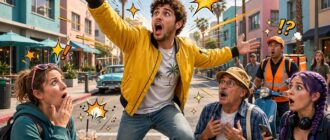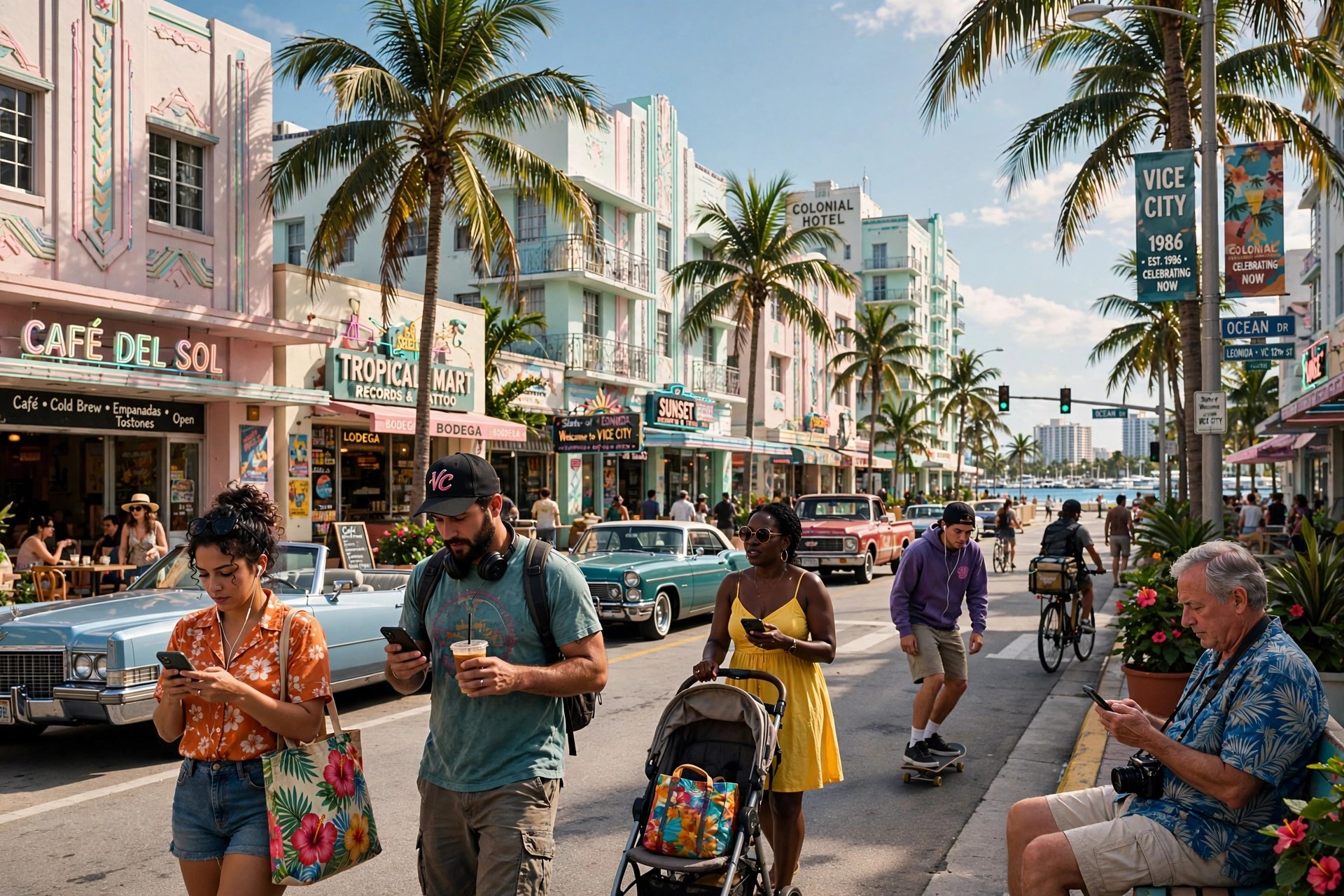
In GTA 6 pedestrians live their own lives: they have character traits, activities and even their own “social media” right inside the game world. It sounds unusual, but that’s exactly how the fictional Florida in Rockstar’s new game works. Vice City’s residents became one of the most discussed topics in reviews — and now we’ll tell you why.
What NPCs are and why everyone is talking about them
An NPC is a non-playable character — “non-player character” in English: a resident of the game world who is controlled not by a person but by a program. Passers-by on the streets, shop assistants, car drivers — in games all of these are NPCs. In short: NPCs are everyone who lives in the game except you. GTA 6 has a great many such residents, and all of them live by the rules of one world — that’s why the city feels whole.
Why is there so much talk about them? In the games of recent years there are more and more “systemic” characters: a program controls them not by one pre-recorded script but by rules. You influence the world — and the world answers. In GTA 6 this approach was extended to the residents of a whole city, and that’s exactly why pedestrians ended up in the spotlight.
Rockstar’s developers made the fictional Florida “alive”, and now the city’s residents are examined as closely as the graphics or the controls. The more interesting the residents, the livelier the city feels — and the more you want to walk around it. No wonder the reviews talk about pedestrians almost as thoroughly as about the game as a whole.
Personalities and reactions
The main feature of GTA 6’s residents: pedestrians have character traits, and it’s those traits that shape behavior. In other words, a resident is not a faceless figurine but a “personality” with a character of their own, and that character decides how they will react to your actions. The reactions to the player are worked out so deeply that reviewers specifically test all kinds of situations.
The most famous test is what happens if you follow a stranger. Reviewers from EZG took this apart, and the reactions turned out genuinely detailed. We won’t retell exactly how such tailing ends — let it stay a surprise: the best way to find out is yourself in the game or in detailed write-ups.
What does this change for you? The story in the game is always the same, but every walk turns out different: there are many residents, their characters are different, and the reactions don’t repeat on schedule. It makes the game feel like a real city where you can’t know in advance what’s waiting around the corner.
Big technology stands behind each such reaction: for thousands of residents to react in their own ways, the game has to compute each one’s behavior at the same time. That’s why NPCs are called an interesting technology, not just background decoration.
A living Florida: residents’ activities and “social media”
The game is set in a fictional Florida — a place invented by the developers. Its city, Vice City, is densely populated: there are many people on the streets everywhere. The residents also have their own activities: they don’t stand still for decoration, they live their own lives. Sport-Express wrote about this, for example, on November 27 in a piece about how the residents, their activities and Vice City’s social media work.
From these activities comes the feeling of a real city: the street looks alive even if you’re just walking past and not doing anything. The crowd is not a picture in the background but a mass of characters with their own business.
And the most curious part — the “social media”. According to reviewers, Vice City’s residents have their own “social media” inside the game world: something like the social networks we’re used to, only for virtual residents. The names of these “social networks” and the details of how they work haven’t been revealed in reviews yet, so we invent nothing and wait for verified data. One thing is already clear: the residents’ life isn’t limited to the streets — it has a “virtual” side too.
Unexpected encounters on a walk
A densely populated city means not only crowds but also surprises. Reports and reviews note: in Vice City you come across armed pedestrians and aggressive dogs. Because of that an ordinary walk can turn into an event — you can’t guess in advance whom you’ll meet around the corner. The game world reacts to your actions instead of just serving as a backdrop for races.
The word “event” here is no exaggeration. In ordinary games a walk is a way to get from point A to point B. Here, on the way, you can run into something you’ll later want to tell your friends about: reviewers note that even a simple walk around the city sticks in memory. By the way, it’s exactly the dense population that makes such encounters possible: there are many people in Vice City, and each of them is a small behavior system, not a lifeless figurine in the background.
Reviewers advise treating unfamiliar residents carefully — as in a real big city: look first, act later. That way every walk turns out unlike the previous one — and that’s part of the charm of a living world.
Why Rockstar did it
The answer is simple: for immersion. Immersion is when you forget there’s a screen in front of you and perceive the city as a real place. When pedestrians have characters, activities and their own “social media”, the city stops being scenery — you feel like a part of a living world, not a guest on an empty map. In such a world even simply walking around and watching the residents is interesting: every street looks as if something is happening there right now.
Making such a world isn’t easy: the more characters and reactions the residents have, the more the game has to compute at once. Rockstar is known for loving to invest exactly in such world details, and Vice City is a fresh example of that approach.
By the way, the game where pedestrians live their own lives had a record start — the details are in our article about GTA 6’s record launch. And we collect all the news about the game in the GTA section — drop by, it’s interesting there.
So Vice City’s residents are not a small detail but a big part of why GTA 6 became an event. The more living details a city has, the more interesting it is to be in it — and judging by the reviews, Rockstar prepared a great many of them.
Let’s gather the reviewers’ main observations about Vice City’s residents. Pedestrians have character traits that shape their behavior — EZG’s write-ups confirm it. Reactions to the player are detailed: for example, reviewers tested what happens if you follow a stranger. The city is densely populated: residents are busy with their own business and live their own lives. According to reviewers, residents also have their own “social media” in the game world — Sport-Express wrote about it on November 27. There are armed pedestrians and aggressive dogs on the streets, so an ordinary walk can turn into an event. All together it makes the fictional Florida truly alive.